Most people don’t think about their trees until something goes wrong. A branch cracks during a late-season storm, the power flickers, or worse, a trunk splits and suddenly half of it is resting on your roof while the other half is blocking your driveway.
When that happens, you’re calling tree services in a panic alongside everyone else who just had the same bad morning. Prices spike, availability shrinks, and you’re stuck waiting or paying a premium just to get someone out there.
Here’s what the pros know that most homeowners don’t: the best time to remove a problem tree is right now, in early spring, before the rush hits and while the conditions are still working in your favor.
The Dormant Window Is Closing
Trees go dormant in winter, which means no leaves, no active growth, and no sap running through the wood. This makes them lighter, easier to handle, and far less messy to take down, which translates directly into faster work and lower costs.
That window stays open through early March here in southeast Wisconsin, but once temperatures climb and buds start forming, the work gets harder and schedules fill up fast. February and March are statistically the cheapest months for tree removal across the industry because demand is low, crews aren’t stretched thin, and the ground is still firm enough that heavy equipment won’t tear up your lawn.
If you wait until May or June, you’ll be competing with everyone else who put it off, and you’ll pay accordingly.
What Your Insurance Won’t Tell You
Here’s something that surprises a lot of homeowners in Muskego, New Berlin, and the surrounding areas: your homeowner’s insurance probably won’t cover preventative tree removal.
If a tree falls on your house during a storm, you might be covered for the structural damage and the cleanup. But that dead oak leaning toward your garage, the one you’ve been meaning to deal with for two years, is considered routine maintenance. That’s entirely on you.
The Real Cost Breakdown
When you get a quote for tree removal, you’re actually paying for several things bundled together: the crew’s time and expertise, the equipment, the cutting and safe removal of the tree itself, and then hauling all that wood and debris away from your property.
That last piece, the hauling and disposal, adds more to the bill than most people expect. Depending on the size of the tree and how much material there is, you could be looking at an additional couple hundred dollars or more just for someone to drive your wood to a dump or a processing yard.
But here’s the thing: not every homeowner needs that part of the service. Maybe you heat with wood during our Wisconsin winters and you’d actually love to keep what comes down. Maybe you’ve got a fire pit you use all summer. Maybe you’re handy enough to split and stack it yourself, or you know a neighbor who’d be thrilled to take it off your hands.
If that sounds like your situation, why pay for something you don’t need?
Introducing Chop & Drop
We built this service for exactly that kind of homeowner.
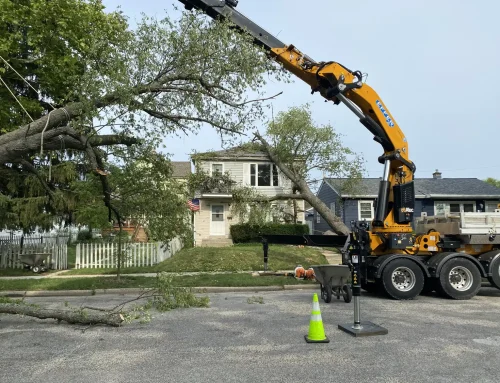
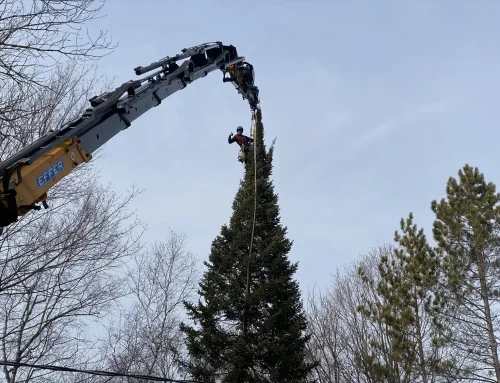
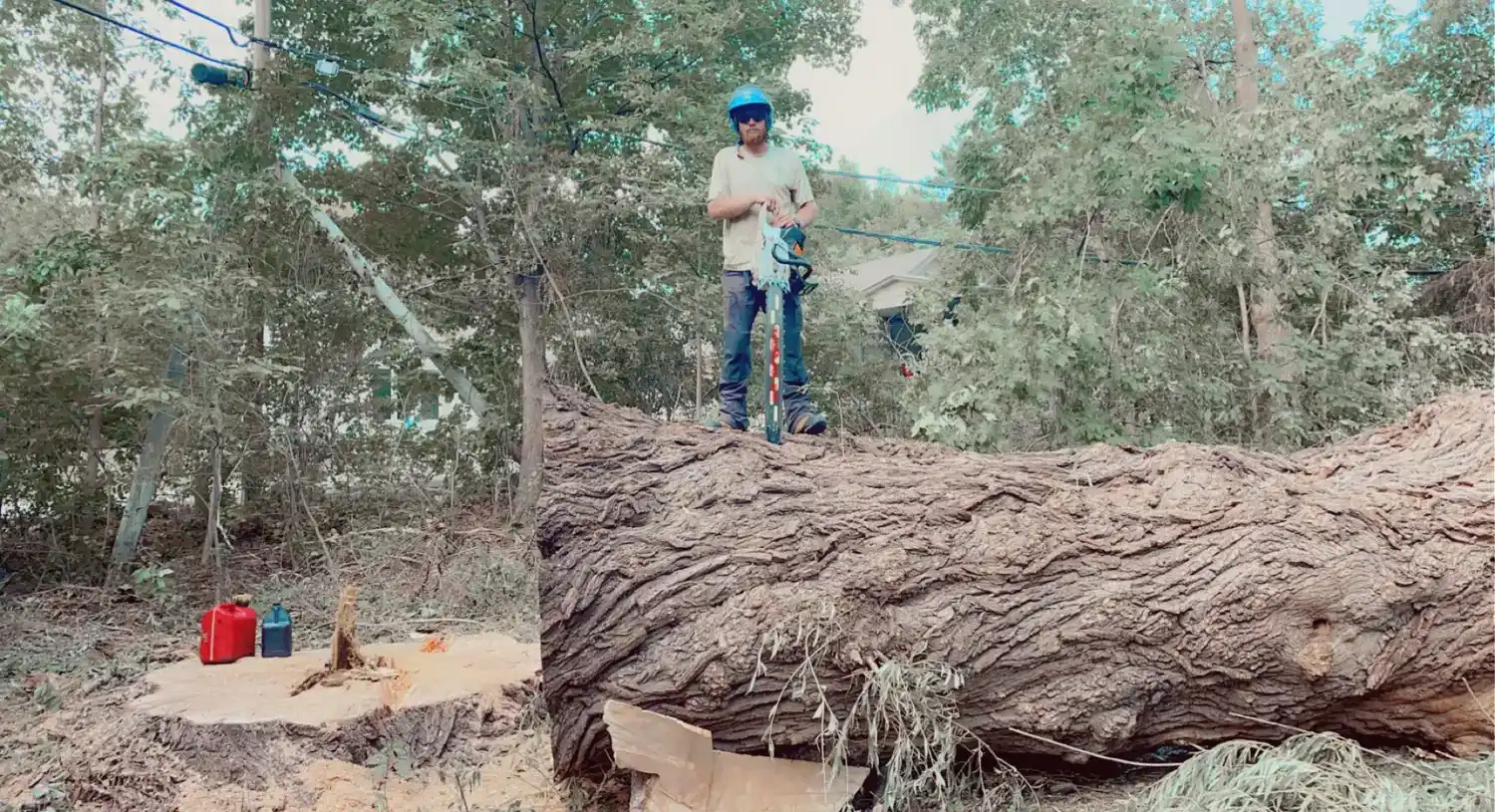
With Chop & Drop, Russ’s Tree Service handles the professional work: the assessment, the cutting, and the safe removal of the tree from where it stands. We fell it, section it into manageable pieces, and leave the wood wherever you want it on your property. You take it from there.
It’s the same skilled crew, the same professional equipment, and the same attention to safety that we bring to every job. The only difference is you’re not paying us to haul away wood that has real value to you or someone you know.
What you do with that wood is up to you. Some folks stack it for winter heating or their backyard fire pit. Others have it milled into lumber for furniture or woodworking projects. Some just know a neighbor who’s always looking for free hardwood.
And if you want help with the cleanup but not the full haul-away, we can add that for an additional fee. It’s flexible enough to fit what you actually need.
For homeowners across Muskego, Big Bend, Franklin, and the rest of Waukesha County, Chop & Drop is the practical option that fits how you actually live.
Your March Checklist
Take a walk around your property this weekend and look up at your trees with fresh eyes.
Are there dead branches hanging over your roof that you’ve gotten used to ignoring? Has a tree started leaning in a direction that makes you a little nervous when the wind picks up? Have limbs crept close to the power lines over the past few years without you really noticing?
These are the things that become emergencies once spring storms roll through southeast Wisconsin, and addressing them now while the ground is firm and the schedule is open saves you real money and real stress.
Give us a call or fill out the form on our site and we’ll come take a look at what you’re dealing with. We’ll give you an honest assessment, tell you what actually needs to come down versus what can wait, and let you know whether Chop & Drop makes sense for your situation.
The dormant season doesn’t last forever, but those trees will still be standing when it ends. The only question is whether you deal with them on your schedule or on theirs.