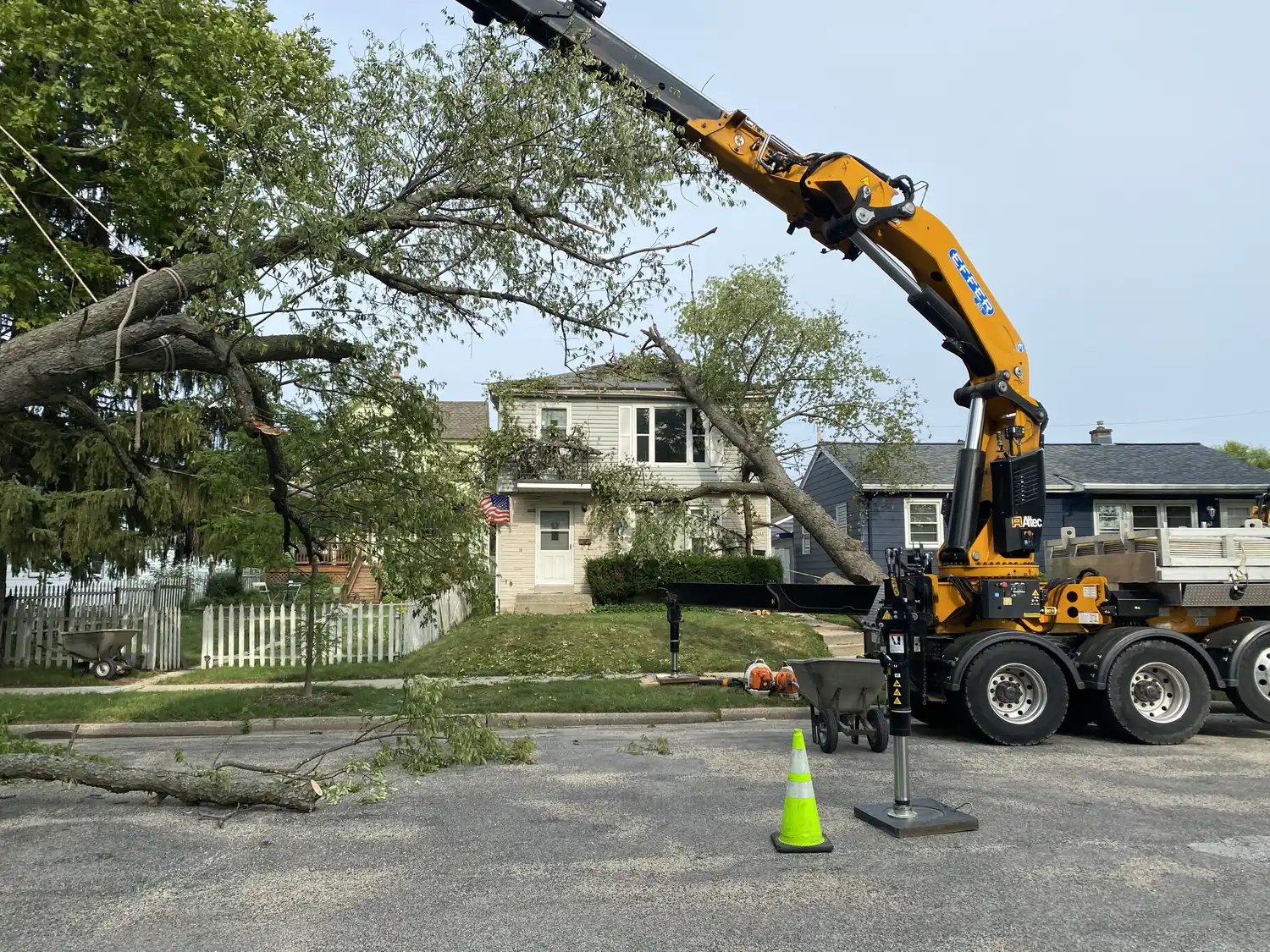
The first thing most people do when they realize a tree needs to come down is search for what it’s going to cost. The ranges you find online are enormous, and most of them aren’t specific to this part of the country. A quote for tree removal in North Carolina doesn’t tell you much about what you’ll pay in Muskego or New Berlin, where the species mix, lot sizes, and labor market are all different.
Here’s what tree removal actually costs in Waukesha County and the surrounding southeast Wisconsin area, based on the work we do every week.
The Baseline: What Drives the Price
Tree removal isn’t one job. It’s a sequence of tasks, and each one adds cost. Understanding which parts of the process you’re paying for is the fastest way to figure out where your particular tree falls on the pricing spectrum.
Tree height and trunk diameter are the starting point. A 25-foot ornamental is a fundamentally different job than a 70-foot oak with a 30-inch trunk. The taller and thicker the tree, the more time, equipment, and rigging it takes to bring it down safely.
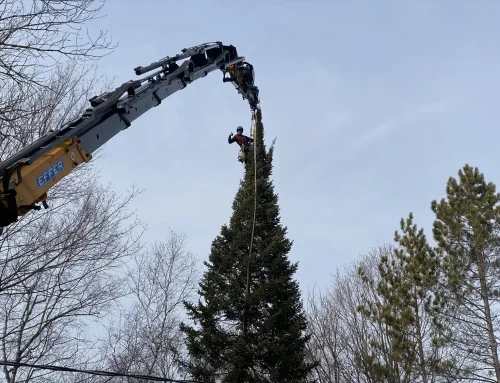
Location on the property matters as much as size. A tree standing alone in the middle of a yard with clear drop zones in every direction is straightforward work. A tree wedged between the house, the garage, and a power line requires precision rigging, sometimes a crane, and a slower, more deliberate process. That costs more because it takes more skill and more time.
Species plays a role because wood density affects how long every cut takes and how heavy the sections are. Hardwoods like oak and maple take longer to process than softwoods like pine or cottonwood. A dead tree that’s been standing for a year or two can actually be harder to work with because the wood becomes unpredictable and brittle.
Access is the factor people forget about. If the crew can back a truck right up to the tree, the job moves fast. If they have to carry every piece through a gate, across a patio, and around a garden, that’s hours of additional labor.
Typical Price Ranges in Waukesha County
These are approximate ranges for full-service tree removal, which includes cutting, hauling all debris, and leaving the site clean:
Small trees (under 30 feet): $400 to $900
Medium trees (30 to 60 feet): $900 to $2,000
Large trees (60 to 80 feet): $2,000 to $3,500
Very large or hazardous trees: $3,500 and up
Stump grinding adds $150 to $500 depending on stump size, and it’s quoted separately from the removal itself.
These numbers shift based on everything listed above, which is why we always recommend getting a written estimate based on an actual site visit rather than trying to budget off a phone call.
Where the Money Goes
When you look at a tree removal quote, roughly 60 to 70 percent of the cost covers the skilled labor and equipment needed to get the tree on the ground safely. Climbers, rigging, bucket trucks, cranes when necessary. That part of the job requires training, insurance, and expensive equipment, and it’s where safety lives.
The other 30 to 40 percent covers what happens after the tree is down: loading the wood, chipping the brush, hauling everything to a disposal site, and cleaning up the yard. It’s physically demanding work, but it doesn’t require the same specialized skill as the cutting.
That breakdown matters because it means there’s a real way to reduce the total cost without compromising on the part that actually keeps your property and your family safe.
How to Spend Less Without Cutting Corners
If the cleanup and hauling are 30 to 40 percent of the bill, and you have a way to handle the wood yourself, you can skip that portion entirely. That’s exactly what our Chop & Drop service does. We send the same crew, use the same equipment, follow the same safety protocols, and cut the tree down the same way. We just leave the wood on your property instead of hauling it away.
The result is the same tree, safely removed, at 30 to 40 percent less cost:
Small trees: $200 to $500
Medium trees: $500 to $1,000
Large trees: $1,000 to $1,800
That’s a meaningful difference, especially when you’re dealing with multiple trees or a tight budget. A lot of homeowners in the area heat with wood, have fire pits, or know someone with a truck who’ll come grab it. If that’s you, Chop & Drop lets you keep the savings and the wood.
When Full Removal Makes More Sense
Chop & Drop isn’t always the right call. If the tree is in a tight space with nowhere to stage the wood, if you don’t have the physical ability or equipment to move heavy logs, or if you simply don’t want to deal with it, full removal is worth the additional cost. We handle everything and you come home to a clean yard.
The point isn’t that one option is better than the other. It’s that you should know both exist so you can choose the one that fits your situation and your budget.
Get Real Numbers for Your Tree
Online estimates only get you so far. If you want to know what your specific tree will cost to remove, call Russ Tree Service at (414) 422-9298 for a free on-site estimate. We’ll quote both full removal and Chop & Drop so you can compare. We work throughout Muskego, New Berlin, Big Bend, Franklin, Brookfield, and the rest of Waukesha County.