New Berlin went through a massive building phase between the mid-1980s and the early 2000s. Subdivisions filled in along Calhoun Road, through the Coffee Road corridor, down toward National Avenue, and into what are now established neighborhoods like Red Fox Crossing, Autumn Trace, and Thomson Hollow. Every one of those new homes got a few trees in the front yard and maybe one or two in the back. The developers picked species that grew fast, looked decent in year one, and kept costs down.
Thirty to forty years later, those trees are becoming a problem.
What Are Builder-Grade Trees?
When a developer plants a subdivision, they’re not thinking about what the trees will look like in 2026. They’re thinking about curb appeal for the model home tour. That means fast-growing, inexpensive species that fill out quickly and look presentable on closing day.
In southeast Wisconsin, that typically meant Bradford pears, silver maples, Lombardy poplars, and Siberian elms. All of these trees share the same fatal flaw: they grow fast but age poorly. Their branch structures are weak, their wood is brittle, and they become liabilities well before they should be reaching maturity.
Which Species Are Most Likely to Fail?
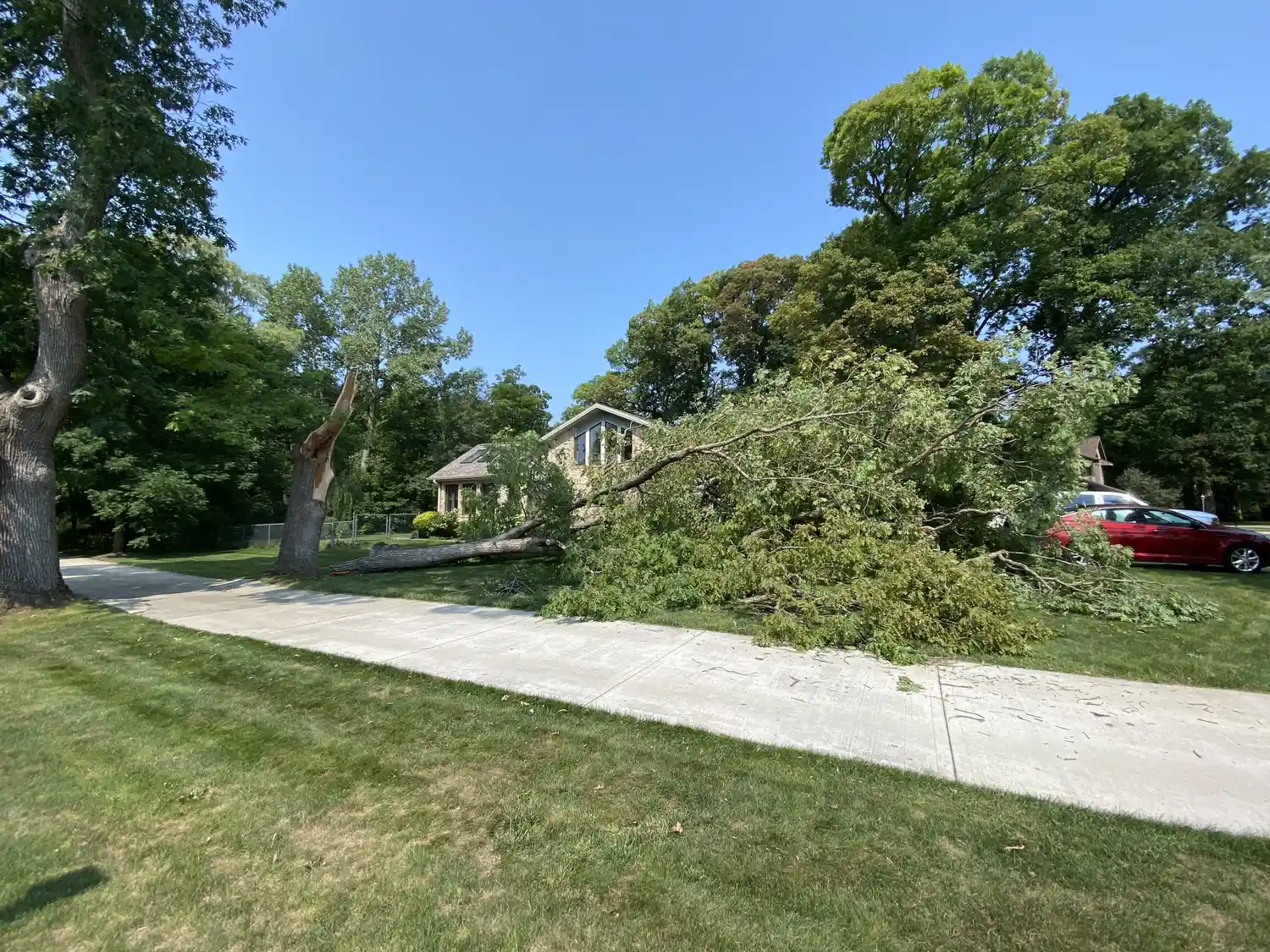
Bradford Pear. The Bradford pear was the developer’s favorite for a reason. It’s symmetrical, it flowers in spring, and it grows fast. But its branch structure is a ticking clock. Bradford pears form tight V-shaped crotches where major limbs meet the trunk, and those joints are structurally weak. After 20 to 25 years, the tree starts splitting apart under its own weight. A moderate ice storm or a windy night along the I-43 corridor is enough to send half the tree into the yard, onto a car, or through a fence. If you have a Bradford pear that’s been in the ground since the 1990s, the question isn’t whether it will split. It’s when.
Silver Maple. Silver maples grow enormous in a hurry, which is exactly why developers planted them. The problem is that the wood is soft and the root system is aggressive and shallow. Silver maple roots crack driveways, invade sewer lines, and push up sidewalks. The branches drop in every storm. And because the tree is so large by the time it starts failing, removal becomes a significant job rather than a quick afternoon project.
Lombardy Poplar. These tall, narrow trees were popular as windbreaks and privacy screens. They’re also short-lived, disease-prone, and nearly impossible to maintain. Most Lombardy poplars planted in the 1980s are already dead or dying. The ones still standing tend to be hollow and unstable.
Siberian Elm. Siberian elms were sold as a hardy, fast alternative to American elms after Dutch elm disease swept through. They are hardy, but they’re also messy, weak-wooded, and prone to splitting. They seed aggressively, and the wood quality is so poor that major limbs can snap in calm weather.
How Can You Tell If a Tree Is Failing?
Age alone isn’t a death sentence. Plenty of well-placed, well-maintained trees outlive their expected lifespan. But builder-grade trees in New Berlin are hitting the age where you need to pay attention to specific warning signs.
Leaning. A tree that has always had a slight lean is one thing. A tree that started leaning recently, especially after a storm or heavy rain, has a root problem. If you can see soil heaving or cracking on the side opposite the lean, the root plate is failing.
Canopy dieback. Dead branches at the top of the tree, progressing downward, indicate systemic decline. The tree is losing its ability to deliver water to the extremities. This is different from a single dead branch, which can be pruned.
Trunk cracks and cavities. Vertical splits in the trunk, large areas of missing bark, or visible hollows all compromise structural integrity. A tree can survive with some internal decay, but if the remaining sound wood is less than about a third of the trunk diameter, the tree is a fall risk.
Mushrooms at the base. Fungal fruiting bodies growing at the base of the trunk or on surface roots usually indicate internal rot. The fungi are decomposing dead wood inside the tree.
Multiple leaders with included bark. When two major trunks or branches grow together with bark trapped between them instead of forming a solid union, the joint is weak. This is the defining failure point of Bradford pears, but it shows up in silver maples and other fast growers too.
Should You Save or Remove a Failing Tree?
If the tree is structurally sound, still producing healthy foliage, and isn’t causing property damage, professional trimming can extend its useful life by years. Removing deadwood, reducing weight on overextended limbs, and correcting structural issues through pruning is almost always cheaper than removal and gives you more time with a mature tree.
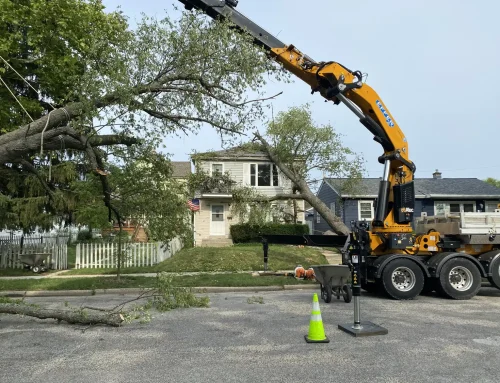
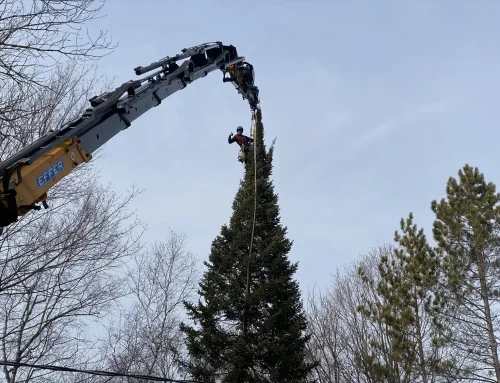
But if the tree has significant structural defects, is the wrong species for the location (roots in the sewer, branches on the roof), or is already in decline, removal is the better investment. Every year you wait, the tree gets bigger and the removal gets more complicated. A silver maple that could have been taken down for a reasonable cost at 30 years old becomes a crane job at 40.
The calculation is straightforward: if the cost of ongoing maintenance and the risk of damage exceed the cost of removal and replanting, it’s time. And in New Berlin, a lot of those builder-grade trees are crossing that threshold right now.
What Should You Plant After Removing a Problem Tree?
Taking out a problem tree doesn’t have to mean a bare yard. We work throughout New Berlin and can advise on replacement species that are suited to your soil, your lot size, and Wisconsin’s climate. Native oaks, sugar maples, and disease-resistant elms all do well in Waukesha County and will outlast any builder-grade tree by decades.
If you’ve got trees on your property that were planted when the house was built and you’re starting to wonder about them, call Russ Tree Service at (414) 422-9298 for a free estimate. We’ll tell you what’s worth keeping, what needs work, and what should come down before the next storm decides for you. Learn more about our tree removal process.